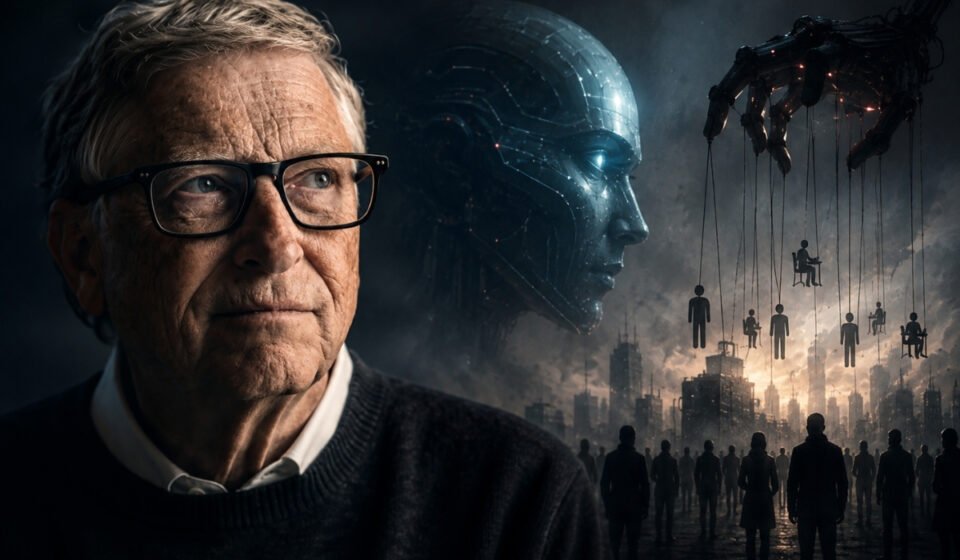

Billionaire and Microsoft co-founder Bill Gates has issued a stark warning about the accelerating dangers of artificial intelligence, suggesting the technology could become the “worst source of injustice” if left unchecked and unregulated.
Gates’ Shift from Optimism to Concern
In a recent article on his website and an interview with The New York Times, Gates revealed a significant change in his perspective on AI. He has moved from early optimism about its potential to growing anxiety over its rapid development.
Gates pointed to recent advances in AI tools, particularly coding software like Claude Code from Anthropic, as well as conversational models that now surpass humans in certain abilities. He believes these developments show how quickly the technology is entering a new phase, while societies and infrastructure remain unprepared for such a shift.
He described AI as potentially ushering in one of the most turbulent periods in human history, especially given its likely widespread impact on the job market.
Criticism of AI Companies’ Silence
Gates directed sharp criticism at the tech sector, claiming that some AI company leaders are aware of the potential risks, from massive job losses to the possibility of AI being used to create biological weapons.
According to Gates, some companies may prefer not to speak publicly about these dangers to avoid affecting future investments or their high valuations, especially as firms race to develop more advanced models.
Unlike previous technological shifts, Gates argues that AI could replace human cognitive abilities in both office and manual jobs simultaneously. This could limit displaced workers’ ability to transition to other sectors.
Proposed Taxes on AI and Robots
To mitigate AI’s impact on the labor market, Gates suggested several measures, including taxing the core computing units used to run AI models—known as tokens—as well as taxing robots used in workplaces.
He believes such taxes could make replacing employees with automated systems more expensive. The revenue generated could then be directed toward retraining affected workers and preparing them for new roles.
Gates also called for creating “reserved for humans” areas, where AI systems would be barred from taking over jobs that require deep human interaction, such as mental health specialists, caregivers, and doctors responsible for delivering sensitive medical diagnoses to patients.
Regarding cross-border risks, such as AI’s potential use in developing biological weapons, Gates urged the creation of a specialized international oversight body, similar to existing agreements and agencies that regulate fields like nuclear energy and aviation.
Debate Over the Feasibility of AI Taxes
While some experts agree with Gates on the need to address AI’s consequences, others question the practicality of his proposed solutions, particularly taxing the use of AI models.
Oren Etzioni, a computer science professor, told ABC News that imposing a tax on AI units would be like taxing keystrokes on a typewriter. He warned that taxing AI usage within the United States could push companies to rely on foreign models, giving overseas competitors an advantage.
Some experts argue that leveraging existing government agencies to develop effective regulatory policies might be more practical than creating new bureaucratic bodies.